


Sign in with Google
If you have ever worked on TikTok operations, you have probably seen “UGC” everywhere, in briefs, creator outreach messages, and internal content folders. But UGC meaning is often misunderstood, especially by new operators.
For TokPortal Managers, UGC is not just a marketing buzzword. It is the raw material you will package, quality-check, localize (when needed), and publish through real local accounts. When you understand what UGC is (and what it is not), you make better calls on content selection, editing restraint, compliance, and performance.
UGC stands for user-generated content. In social media, it refers to content created by real people (customers, fans, creators, everyday users) that looks and feels native to the platform.
On TikTok, UGC usually has these traits:
UGC can be organic (a user posts because they want to), or commissioned (a creator is paid to produce content that still feels like a genuine user post).
That second category matters a lot operationally: on TikTok, a huge amount of “UGC” is actually paid creator content that is designed to look organic. That is normal, but it changes your responsibilities around disclosure, rights, and usage permissions.
UGC performs because TikTok is an attention marketplace that rewards content that feels native, not content that feels like an ad.
From a behavior standpoint, this aligns with long-running research on trust. For example, Nielsen’s widely cited trust research consistently shows people trust recommendations from other people more than traditional advertising formats (see Nielsen’s trust reporting overview here). The exact numbers vary by year and study design, but the direction is stable: social proof beats polished brand claims.
For operators, the practical takeaway is simple:
TokPortal exists to help teams publish organic content from real local accounts across markets. TokPortal Managers are the people who make the UGC engine run reliably.

UGC gets used loosely. As an operator, you should mentally bucket content into one of these types because the workflow and risk differ.
This is when a real customer or fan posts about a product or app on their own.
What managers should know:
A brand pays a creator (or hires a UGC creator) to produce content that feels like a user review, demo, unboxing, or “day in the life.”
What managers should know:
Sometimes the “creator” is internal, an employee, a founder, or the brand team itself.
What managers should know:
TokPortal Managers are not just “posting videos.” You are the operational layer that protects account health and turns content into consistent, scalable publishing.
Based on TokPortal’s positioning and feature set (secure account management, scheduling and uploads, dashboard management, and video editing options), a typical manager workflow looks like this:
UGC tends to arrive messy: multiple versions, unclear filenames, missing captions, missing context.
Your goal is to create order:
Operationally, this step is where campaigns either become scalable or become chaos.
Before you schedule anything, do a fast reality check:
When UGC fails, it is often because someone “improved” it into an ad.
This is where managers add the most value, especially across countries.
You are looking for:
If you want a deeper cross-border compliance overview, TokPortal’s own guide on legal essentials for posting branded TikToks in foreign markets is a strong reference point.
This is not about rewriting the entire concept. Usually it is small changes that prevent friction:
Even with the same core creative, small localization can protect retention. If you want a broader operations view, TokPortal’s post on managing 10+ TikTok accounts from a single dashboard is relevant, but the key for managers is consistency: make the local account feel local.
UGC is most effective when it is posted consistently and tested systematically.
As a manager, your job is to:
TokPortal’s platform is designed for posting and scheduling across supported countries without VPN hacks. Your role is to execute cleanly.
The biggest mistake in UGC operations is treating “content we can download” as “content we can use.”
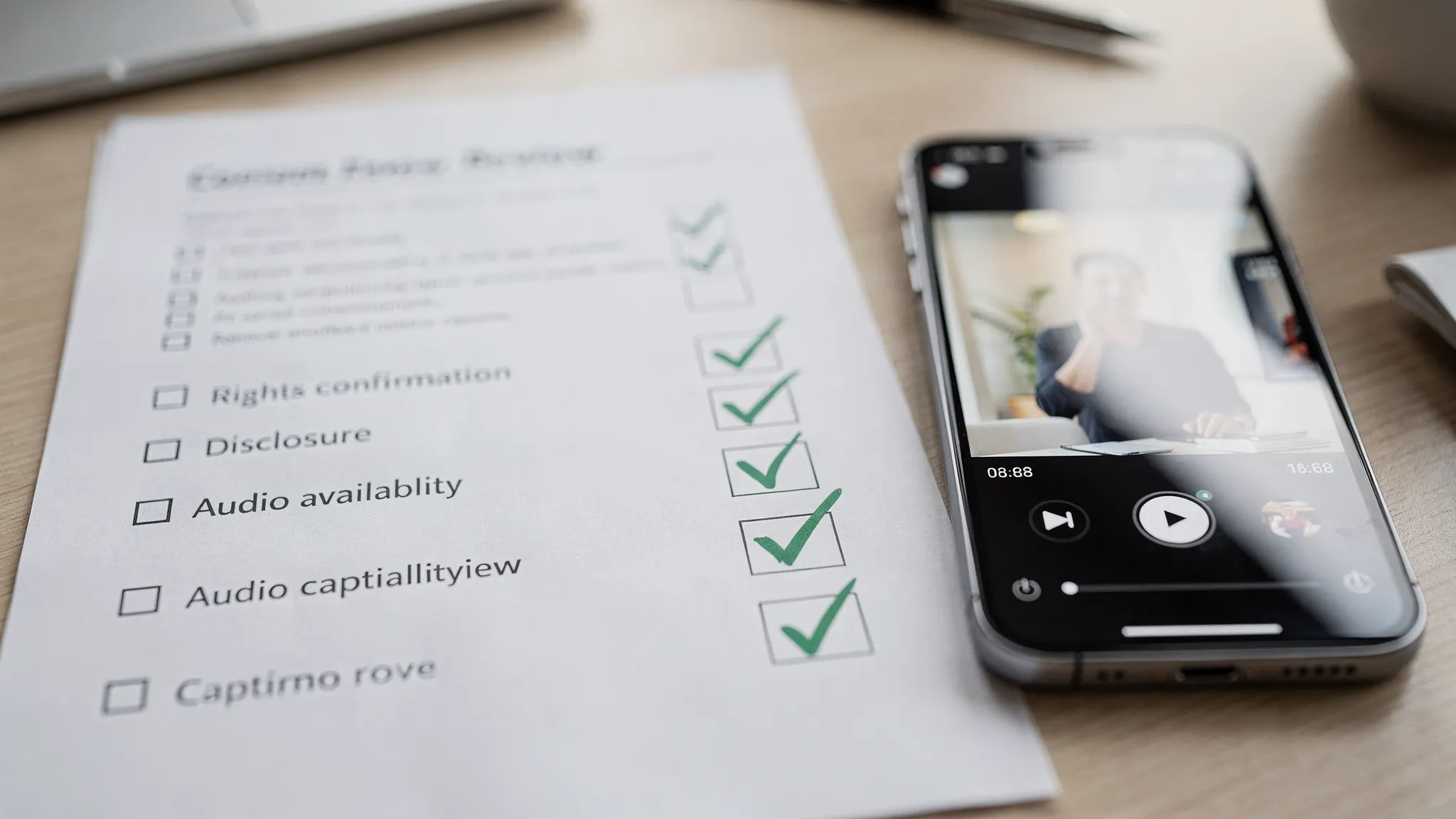
As a TokPortal Manager, you should get comfortable asking for clarity before you post. A basic rights checklist includes:
If the content is commissioned (paid), disclosure often applies. In the US, the FTC’s Endorsement Guides and related guidance are the baseline standard for disclosure expectations (start here: FTC endorsements guidance). TikTok also has its own branded content tools and policies, which you should follow for proper labeling.
Practical manager rule: if you are unsure whether something counts as an ad or endorsement, pause and ask. Fixing a takedown is harder than preventing one.
A lot of people hear “UGC” and assume it must look completely organic, with no labels.
That is not how serious operators work.
If a creator was paid, gifted, or otherwise incentivized, disclosure may be required depending on local rules and platform policies. Your job is not to hide the commercial relationship, your job is to keep the content native while staying compliant.
Common disclosure-friendly patterns that keep performance strong:
When managers treat disclosure as a “performance killer,” they create unnecessary risk. The better mindset is: disclosure is part of the format, so integrate it cleanly.
Creators often think in terms of storytelling. Managers should also think in terms of watch behavior.
Strong UGC usually has:
Not “You need to try this,” but “I wasted $200 on X until I tried this 10-second fix.”
Viewers should understand what is happening without sound within the first seconds.
A mini-transformation, a reveal, a ranking, a mistake, a surprise, or a strong opinion.
If the product is shoved into frame like a commercial, it stops feeling like UGC.
Your job is to preserve the creator’s credibility while making the post publish-ready.
These issues show up in real operations and they are usually preventable.
Hard cuts, aggressive captions, heavy branding, and polished transitions can make a UGC clip feel like an ad. Do the minimum needed for clarity.
Even small differences (spelling, references, caption tone, audio availability) can impact retention. The goal is not just distribution, it is local resonance.
An audio that works in one country might be limited in another. Always sanity-check audio availability for the target market.
If rights are unclear, the safest move is to ask, document, and wait. Posting first and apologizing later is a bad operations strategy.
TokPortal Managers earn by helping operate a system: local accounts, consistent posting, and authentic reach. Understanding UGC meaning helps you make decisions that protect three things TokPortal depends on:
If you are considering becoming a TokPortal Manager, focus on building operator skills, not “viral hacks.” The best managers are the ones who can take a folder of messy UGC, turn it into a clean publishing plan, and execute reliably.
To learn more about TokPortal and the kind of operational work managers support, visit TokPortal and explore the blog for deeper playbooks on multi-account management and global TikTok operations.


 Any question? Contact us.



%401x.svg)