


Sign in with Google
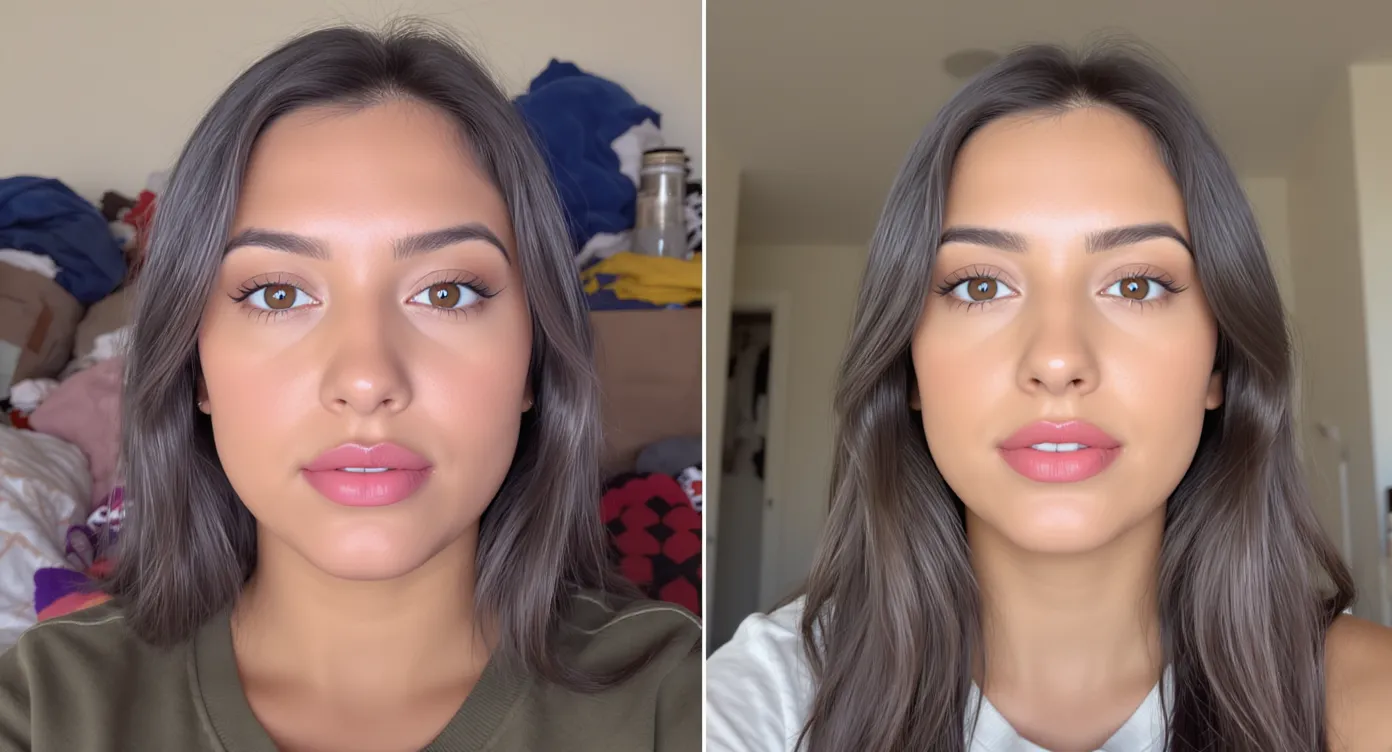
Scrolling through your For You Page in 2025, you will notice a pattern: the clips that stop you instantly are often shot at arm’s length, with a face filling 80 percent of the frame and almost zero polish. This “raw close-up” TikTok video format—sometimes called handheld POV or confessional selfie—dominates every niche from beauty to B2B SaaS. According to TikTok Creative Center’s Top Ads dashboard (March 2025), over 62 percent of high-performing organic videos in the last 90 days featured a tight face framing and minimal editing.
Why does a shaky, front-camera close-up outperform slick studio footage? And how can brands use it responsibly, even when posting in multiple countries? Let’s break down the science, psychology, and algorithmic signals behind the raw close-up, plus practical tips to film, localize, and scale this format with TokPortal.
Eye-tracking research published in the Journal of Interactive Marketing (Feb 2024) found that users maintain gaze on in-app video 1.7 × longer when a human face occupies at least half of the vertical field. A tight crop mimics a real-life conversational distance (roughly 46 cm), triggering the brain’s “intimate zone” processing. The result: viewers feel as if the creator is speaking only to them, not to a mass audience.
Other psychological levers at play:
- Micro-expressions are readable. Subtle eyebrow raises and smirks survive compression better than wide-shot gestures.
- The selfie angle lowers perceived status distance, making experts, founders, or celebrities appear more approachable.
- Imperfections (a visible pore, uneven lighting) signal authenticity, which Gen Z ranks as the number-one reason to trust a brand on social (Baymard Trust Survey, 2025).
If your goal is higher watch-time and quicker trust formation, move the camera closer and let real faces lead the narrative.
TikTok’s recommendation system optimizes for three early signals: hook rate (swipes that stop), hold rate (percentage watched), and engagement (likes, comments, shares, rewatches). Raw close-ups excel at all three:
1. Hook: The abrupt presence of a face emerging full-screen interrupts scrolling inertia.
2. Hold: Lips and eyes create continuous micro-motion that keeps attention.
3. Harvest: Viewers feel compelled to respond, often in comments beginning with “POV: you’re…” or “Same here!” This comment velocity feeds the distribution loop.
Internal TokPortal benchmark data across 3,400 localized accounts (Q1 2025) shows that switching from cinematic B-roll to selfie close-ups raised average completion rate from 38 percent to 54 percent within two weeks, holding other variables constant.
You don’t need an iPhone 15 Pro Max or a ring light the size of a UFO. The entire appeal is low-friction production. Still, small optimizations compound results:
1. Natural diffused light (facing a window) beats harsh artificial bulbs.
2. Use 0.5–1.0× zoom to avoid lens warping; step back if needed.
3. Record in 9:16, 1080 × 1920 minimum, 30 fps. TikTok compresses 4K anyway.
4. Stabilize with elbows on a desk or a US$12 flexible phone tripod.
5. Add auto-captions in-app for accessibility and silent scrollers.
6. Keep runtime under 27 seconds; raw talkers lose momentum beyond that mark.

A simple A-roll close-up becomes even stickier when you overlay 2–3 cutaway clips or screen recordings at key beats. Tools like CapCut Desktop or Descript’s filler-word removal help you punch up pacing while preserving the authentic vibe.
Authenticity is cultural. A direct gaze accepted in the U.S. may feel confrontational in Japan; informal slang that pops in London could confuse viewers in São Paulo. When you plan to publish close-up videos across multiple regions, adjust four surface elements:
1. Language & accent: If you cannot film natively in every tongue, apply AI dubbing or subtitles, but maintain lip-sync accuracy to protect believability. (See our guide on AI dubbing for step-by-step workflows.)
2. Hook phrase: Local idioms outperform translated copy. Swap “Let me put you on” for “Déjame contarte” in Spanish-speaking markets.
3. Background audio: Choose trending sounds available in each country to avoid muted tracks.
4. Regulatory overlays: In France, for example, the hashtag #pub is mandatory for branded content. Bake it into the on-screen text.
TokPortal simplifies execution by letting you clone the same raw clip, attach localized audio or captions, schedule posts for each market’s prime window, and push them from genuine in-country accounts. No VPN gymnastics or SIM swapping.
The B2B workflow SaaS FlowTrack (featured in our detailed case study) pivoted to selfie explainers in early 2025. The founder recorded 12 English close-ups answering pain-point questions, then localized them into Spanish, French, German, and Dutch using AI dubbing. TokPortal handled distribution through four local accounts. Results after 90 days:
- Watch-time +44 percent vs. previous B-roll tutorials
- Lead form clicks +62 percent (attributed via Bitly links in Link-in-Bio)
- 250 percent MRR growth across combined EU funnels
- Over-filtering: Beautify filters can distort skin tone and kill authenticity. Keep enhancements below 10 percent intensity.
- Script reading: Visible eye darts toward teleprompters break the illusion. Memorize bullet points instead.
- Cluttered backdrop: A messy room steals cognitive load. Use neutral walls or shallow depth-of-field.
- Hard sells in first three seconds: Lead with value or intrigue, not “Buy now.”
TikTok analytics for raw close-ups should prioritize:
- Average watch time: Aim for 13–15 seconds on a 20-second video (65–75 percent completion).
- Shares per 1,000 views: Shares signal value to the algorithm. Benchmark at 10+.
- Profile visits: Correlate spikes with CTA strength.
- Geo-split performance: Use TokPortal’s dashboard to compare watch-time by country; tweak hooks where drop-off is high.
Should brands always show a face, even if the product is software? A talking head explaining a pain point still outperforms a screen-record only. Layer product demos as B-roll while the face narrates.
What if my spokesperson has a strong accent not suited for all markets? Record once, then use high-quality AI voice cloning to re-dub in the local language while preserving vocal tone. Sync carefully so lips don’t look off.
Can I repost the same raw clip on multiple local accounts without getting flagged as duplicate content? Yes, if you change at least two surface signals: audio track and on-screen text. TokPortal automates these variations to avoid the duplicate detection penalty.
Raw close-up videos convert because they feel like a one-to-one FaceTime chat, not a polished ad. Combine that intimacy with localized distribution and you unlock exponential reach without spending on paid media.
TokPortal lets you:
- Spin up genuine local TikTok accounts in 40 + countries
- Schedule raw close-ups with automatic audio and caption variations
- Track watch-time, shares, and geo performance in a single dashboard
Create your free workspace today and post your first localized selfie video in minutes—no VPNs, no bots, just real faces reaching real local audiences.
Start for free at TokPortal.com and turn that handheld honesty into global influence.


 Any question? Contact us.



%401x.svg)