
On this page
A song can arrive in somebody's feed as a performance, a story, a joke or a moment that belongs in their own video. A release announcement gives them information. A useful piece of content gives them something to do with the music. That distinction is the starting point for promoting a song through several social accounts without turning every account into the same billboard.
Account-Generated Distribution (AGD) is an organic growth model where content is distributed through a network of purpose-built social accounts instead of relying on a single brand account or external creators for reach. For an artist or label, the practical question is what each account contributes to the release. One might invite people into the recording process. Another might publish original performances. Each needs a reason to exist beyond repeating the artist's latest announcement.
This guide connects public music examples with a campaign you can plan yourself: account roles, original executions, a sound register and a listening measurement sheet. The examples are outside references, not TokPortal customers. Public observations and third-party reports are identified where they appear; the proposed campaign is our own planning framework.
Sources & real examples
Public accounts, original posts and primary references. Each example is linked where it is discussed.
View all 7 sources and review notes
- Sam Smith and Sienna Spiro duet ↗
Original performance; browser capture obtained 8 September and image inspected before drafting.
- TikTok on Sienna Spiro ↗
May 2026 platform campaign account; not independent AGD attribution.
- Public music account discussion ↗
Self-reported practice; author discloses involvement in a content tool. Results are not independently verified.
- TikTok commercial music ↗
Platform guidance on commercial library and separately cleared music.
- TikTok promotional disclosure ↗
Own-business and incentivized third-party promotional content.
- Spotify source of streams ↗
In-service listening sources, overlapping listener subtotals and UTC reporting.
- TokPortal music workflow ↗
Current configuration and analytics workflow; not evidence of music campaign outcomes.
Start with a moment somebody can use
Listen to the track while imagining a viewer who has never heard the artist's name. What changes during the excerpt? A voice enters, an instrument drops out, an unresolved phrase finds its ending, or the rhythm creates an obvious action. Choose the moment because it makes sense inside a video. There is no universal snippet length that makes every song work.
Write the scene before writing the promotional caption. A rehearsal can make the viewer wait for the harmony. A production demonstration can isolate the sound they did not notice in the full mix. A personal story can explain why a recording sounds restrained rather than triumphant. These are different creative jobs, and each needs its own footage or contribution.
Make a small collection of genuine starting material: a complete performance take, an account of a real writing decision, a cleared session recording, an original visual sequence. Then decide which recurring series could grow from it. If the only available material is one finished promotional video, more accounts will not solve the missing editorial work. Commission the next useful piece before adding another destination for it.
Sam Smith and Sienna Spiro: let the performance carry the post
The original Sam Smith TikTok shows a live duet with Sienna Spiro on “Die On This Hill.” In the captured frame, both singers share the stage and hold microphones; audience silhouettes remain in the foreground. The location label identifies the Castro in San Francisco. The moment feels specific because it belongs to an actual performance, with another person to respond to.
The useful editorial observation is the relationship between the music and the situation. This post offers a collaboration to watch. A release team could create an original rehearsal exchange, an alternate arrangement or a session with another performer. Those are proposed productions, not instructions to reuse this concert recording. They require the participants, footage and permissions that make the scene real.
TikTok's May 2026 account of Sienna's breakthrough also discusses covers and memory montages. That is the platform's campaign narrative. It is useful for finding original material, but it does not establish that the featured accounts belong to a common team or use the AGD label. A celebrity duet is an example of a creative role, not evidence that opening a network produces the same outcome.
For your own performance account, define the recurring attraction precisely. “Alternative arrangements recorded in our rehearsal room” gives a producer something to commission. “Clips of our song” does not explain what makes the next post worth watching. Preserve the musical identity while changing the actual performance, question or setting.
A real multi-account discussion, with a useful unanswered question
In a public r/musicmarketing discussion, the author describes separating accounts by musical mood and content type. Replies ask whether the activity builds lasting interest in the artist and how much work it takes. The author also discloses working on the content tool discussed in the thread. Treat the reported listener growth as a self-report with a commercial interest, not an audited conversion study.
The question behind that exchange is worth keeping: when someone enjoys the surrounding theme, can they still discover the musician? An account about a mood can attract people who care about the mood alone. Your editorial role needs a credible connection to the music, and your profile needs a clear route to the artist. Neither connection requires an aggressive sales pitch in every frame.
Use an identity test during planning. Give a teammate a post and its profile, then ask them to name the artist, explain the account's purpose and find the full recording. If they can describe the aesthetic but cannot identify the music, improve that path. This is an original review exercise, not a claim that the Reddit author's accounts fail it.
Give each account a continuing editorial job
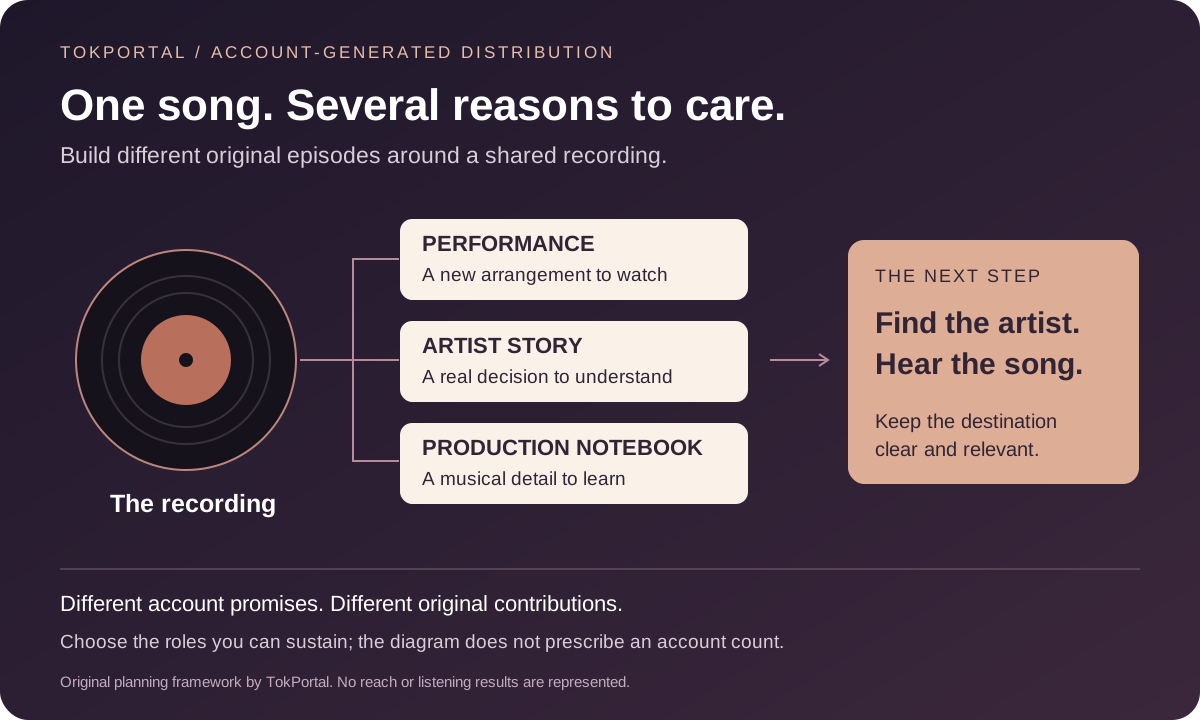
The artist account remains a place for the person behind the work: releases, decisions, conversations and the context of a career. A team can add other accounts when those accounts have distinct promises it can sustain. A session series and a production notebook might both involve the same musician, while giving a returning viewer different reasons to follow.
Feature
Reason to follow
Proposed original episode
Artist account
Performance series
Production notebook
Scene or story series
The table is a set of proposed roles, not a requirement to open four profiles. Start with the roles for which you can already name several original episodes. Assign an editorial owner to each. That person should be able to reject a proposed post because it does not belong, even if the video is otherwise good.
In AGD, account isolation means the identities and editorial purposes differ. Content isolation means the executions differ too. A new handle, color treatment or caption does not turn the same concert export into a new contribution. A fresh arrangement, a documented writing choice and a genuinely new audience prompt can share a song while offering different experiences.
Label team-operated pages clearly. Do not present a label-run account as an independent fan who happened to discover the release. A real fan's post can be discussed or shared with the appropriate permission; it should not become a template for inventing fan enthusiasm. The relationship is part of the context a viewer uses to understand the content.
Turn one recording session into different original episodes
Imagine your team owns a new recording and has arranged a filmed rehearsal. This is a planning example. Before recording, prepare three separate questions: what is surprising about the arrangement, what did the singer change between takes, and what can another musician learn from the session? Each question calls for a different piece of footage and a different explanation.
For the performance series, record the alternate arrangement as a complete moment with its own beginning and payoff. For the production notebook, ask the musician to demonstrate one actual decision and let the viewer hear the difference. For the artist account, record the personal context behind that decision in the musician's own words. You are collecting distinct contributions during one session, rather than inventing extra value in the export menu.
Review each episode without the campaign title above it. Is the post understandable? Is the musical moment audible? Does any text obscure the performance? Does the ending deliver what the opening promised? These questions provide a more useful editing brief than a fixed instruction to add a hook every few seconds. Keep the strongest musical moment intact when an extra overlay would only interrupt it.
Keep a sound register alongside the creative brief
A song title is not a unique platform asset identifier. The sound linked from the inspected duet is this TikTok sound page. In your own campaign, record the exact sound URL selected for each post, along with the recording version and excerpt. Distinguish the intended attachment from what appears on the published post.
This becomes especially useful when you have a studio master, a live version and a remix. Your team may intentionally use different assets, but a report should preserve that distinction. Do not quietly pool every similarly named sound and call the result a single audience. Keep post URLs as the basic inventory, with the sound identifier as another field.
Before expanding production, publish an authorized pilot and inspect its result in the native app. Check the sound label, volume balance, caption and destination on the intended device. Record any mismatch for correction. A configuration file saying which sound was requested is useful operational evidence; the public result tells you whether the viewer encounters the intended version.
Make permissions part of the asset handoff
TikTok's commercial music guidance recommends its Commercial Music Library for promotional content. It says music outside that library is not covered for commercial use by TikTok's general music licenses; its confirmation flow requires the necessary permissions for separately cleared material. Finding a song in the app is therefore not your campaign's permission record.
For each asset, have the responsible person record the recording, composition, visuals, performers, intended platforms and permitted uses. Include the approved excerpt and any territory or time restrictions. This sheet is an operating checklist, not a substitute for the actual agreements. Resolve an unknown with the relevant rights holder before handing the asset to an operator.
TikTok's disclosure guidance covers promotion of your own business as well as incentivized third-party promotion. Use the applicable disclosure setting. A natural performance or useful tutorial can still have a commercial purpose. Good creative work and a clear relationship can coexist; the account's editorial voice does not replace the disclosure.
Give attention a route to the full song
A viewer may want the complete recording, more performances or the person behind the music. Decide which next action fits the account's promise. A production notebook can point to the full version whose arrangement it explained. A performance page can identify the artist and the recording clearly. The invitation should continue the interest created by the post.
Check the destination yourself on mobile. Confirm the artist name, release artwork, available services and the actual version of the song. A pre-release page and a live listening page do different jobs. Review the handoff when the release becomes available so a returning visitor does not face an outdated message. Keep the destination legible without making people hunt through unrelated merchandise or an old campaign.
Use distinct campaign links where the platform supports them and record the placement. A visit to a listening page shows an observed web action. It does not prove that a streaming service counted a play. If someone searches for the artist later instead of following the link, that path may remain unattributed. Keep that limitation visible in the campaign review rather than manufacturing a complete funnel from unrelated totals.
Measure posts, sound reuse and listening separately
Keep three observations separate: what your team published, what other accounts subsequently created, and what the listening reports show. An owned post is controlled distribution. An outside post is an observation of reuse, with the account's relationship to your team recorded when known. A listening result belongs to the service and measurement window that produced it.
Spotify's source-of-streams documentation separates active from programmed listening sources inside Spotify. It also notes that listener subtotals can overlap and that its artist statistics use UTC. Those categories describe where listening happened on Spotify; they are not a report assigning each listener to one of your TikTok accounts.
Build the review around comparable periods and clearly named units. Keep views as views, posts as posts and listeners as listeners. Do not add them into an engagement total. If the same outside post appears in two sound searches, retain one post record and both discovery notes. If an outside account's relationship is unknown, keep it unknown rather than classifying it as an independent fan.
When a post performs unusually well, compare it with the account's ordinary posts at similar ages. The AGD relative-performance guide provides a way to ask that question without treating a selected peak as the normal baseline. Then inspect what people responded to and commission a fresh execution of the useful idea.
Run a release review that changes the next brief
A campaign review should end with a production or destination decision. If viewers ask for the song name, improve identification. If they reach the listening page but encounter the wrong version, fix the handoff. If a format gets repeated by other creators, inspect the actual repetitions before deciding which part of the idea traveled. These are diagnostic questions, not automatic explanations for a chart movement.
For an emerging artist, also examine the workload. Who can keep making the performances, editing the episodes and answering relevant comments? A network whose accounts all wait for one unavailable person is fragile. Build a repeatable preparation process, keep approved assets easy to find and reserve time for original work. Growth in account count should follow a credible production plan.
For a label handling several artists, keep their briefs and observations distinct. A useful format for one release may supply a question for another, but it does not transfer the audience or the result. Record which musical moment you expect to work and why. That makes the next review more informative than a broad instruction to reproduce the last campaign's best-looking video.
Put the AGD music plan into operation
TokPortal handles the account operations when your team has the creative material and briefs ready. Its music workflow documentation shows how to organize bundles, configure videos with a TikTok sound URL and read subsequent analytics. Use the current documentation for scheduling and configuration requirements; availability and supported operations should be checked when preparing the campaign.
Keep the creative brief, approved asset, sound reference and expected destination together in the handoff. After publication, add the resulting post URL and any issue that needs attention. This connects the work you commissioned to the material you later review. An API or an agent can coordinate those records, while your team remains responsible for the editorial decisions and approved content.
Use the distribution planner to estimate the operating layer and keep filming, editing and rights costs in your own budget. Then bring the completed worksheet into the buyer campaign flow. The aim is a network whose accounts give the music useful contexts, whose posts lead somewhere clear and whose results can inform the next recording session.
Your AGD music release worksheet
RELEASE AND PURPOSE
Artist / recording / version:
What should someone discover beyond the clip?
Editorial owner / intended audience:

ACCOUNT ROLE
Public account URL / who operates it:
Reason to follow this account:
Three original episode ideas:
How these differ from the artist account:

EPISODE AND SOUND
Episode ID / original asset location:
Musical moment and reason for choosing it:
Intended TikTok sound URL / version / excerpt:
Approved caption / applicable disclosure:
Sound shown on the actual published post:

PERMISSIONS HANDOFF
Recording / composition / visuals / performers:
Permitted platforms and uses / restrictions:
Responsible approver / approval record:
Unresolved permission or availability issue:

DESTINATION CHECK
Artist and full recording identified:
Listening destination / campaign link placement:
Correct version and mobile path checked by / date:
Pre-release to release-day update owner:

OBSERVATION LOG
Own public post URL / published at:
Observed metric / definition / date / post age:
Outside post URL / attached sound / date:
Outside account relationship: known or unknown:
Listening service / report / window / time zone:
Streams or listeners (do not combine):
Missing values / attribution limitations:

NEXT PRODUCTION DECISION
What did we expect people to notice or do?
What do we actually observe?
Next original episode or destination correction:
Creative cost / rights cost / operating cost:
Owner and next review date:

Written by
Vincent Tellenne
Co-founder & CEO
Vincent is a co-founder and CEO of TokPortal. He works on the infrastructure and operating model behind scaled organic social media distribution.
Learn more about this topic with AI
Related Resources
Related Tools
Put your AGD strategy to work
You make the content.
TokPortal runs the account operations.
Create and operate TikTok and Instagram accounts in your target market. Local operators handle the account work and native publishing. You control the brief, content and campaign from the dashboard, API or MCP.
- 01Choose your market
- 02Define each account
- 03Schedule your content
Review market availability and pricing before ordering. No reach forecast is built into your plan.